

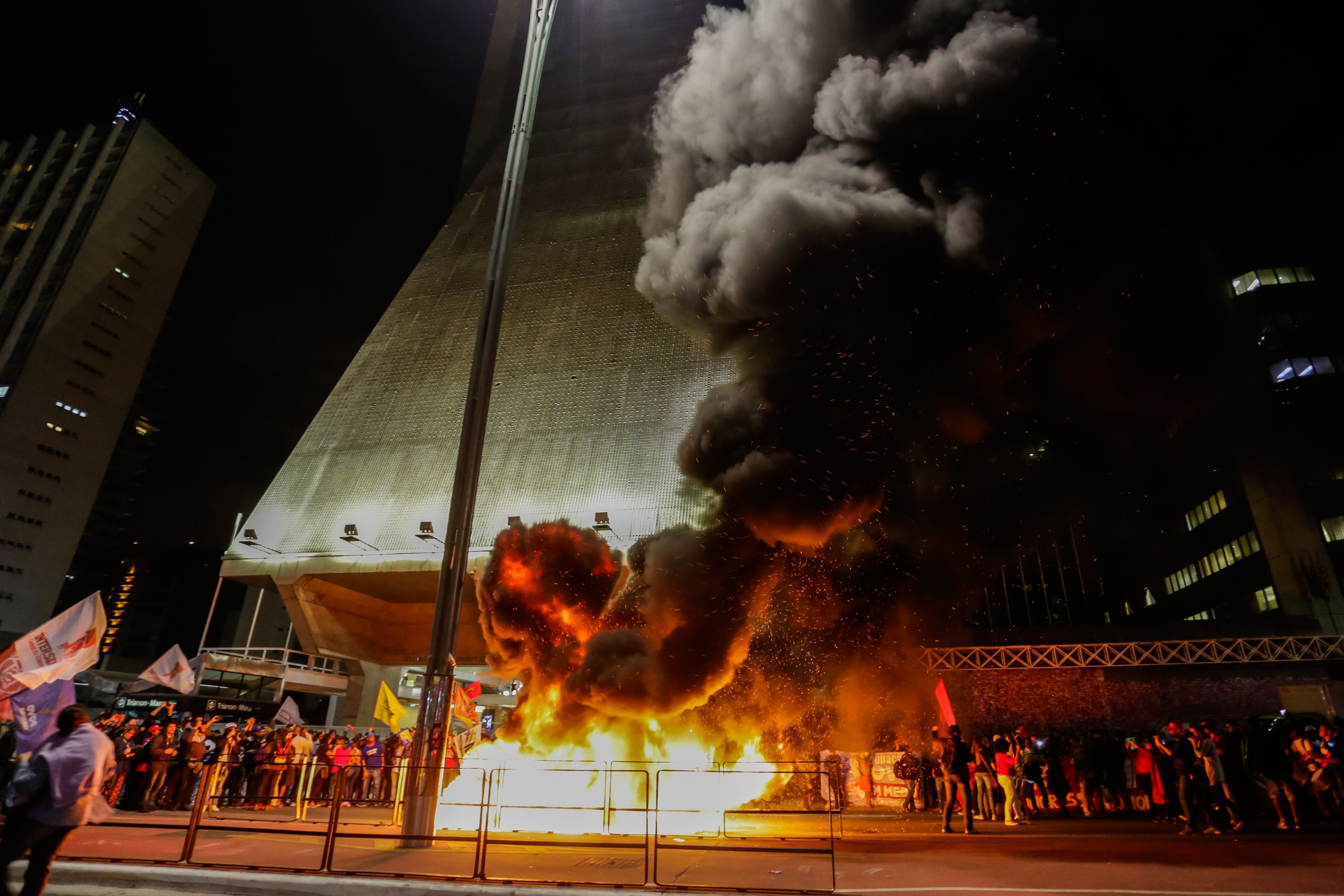
The latest Ipsos poll published by one of Brazil’s most widely read newspapers, O Estado de S. Paulo, has indicated that democracy is not being respected in the country, showing that the nation is currently being governed by politicians who usurped power.
The poll shows that 86 percent of respondents consider the impeachment of democratically-elected President Dilma Rousseff a clear indicator that the terms of democracy have been systematically ignored in Brazil.
Some 94 percent of respondents consider that the current federal government, led by senate-imposed president Michel Temer does not represent the will of the people.
Published a little more than a year prior to the 2018 presidential election, the poll textually noted that “the wave of negativism contaminates public perception about democracy: only half of the population considers that this is the best system for Brazil, and a third affirms that it is not.”
In an odd twist, the research also showed that while 74 percent of the population is against compulsory voting, just 6 percent of voters feel that they are being properly represented by politicians whom they voted for.
While nine in every 10 voters agreed that Brazil has enough resources to be a first world country, they also concurred that the country is prevented from attaining such status due to “corruption.”
Rupak Patitunda, a researcher who helped coordinate the poll, stated that public opinion clearly illustrates that the type of democracy practiced in Brazil “is not representative,” adding that the “expectation” of this type of government is not adhered to by politicians.
The poll comes one week after Temer held meetings with 35 representatives of the lower house; lunched with 58 rural caucus members; dined with 100 lower house members renowned for having little influence in the government body, hence, are prone to vote in accordance with those who support their projects; and relieved 10 ministers of their duties for a 24-hour period just to get enough votes in Brazil’s Chamber of Deputies to beat a bribery charge investigation.
From early June to the end of July, Temer’s administration also authorized some US$ 1.3 billion in parliamentary amendment projects in order to appease lawmakers and secure the votes he needed to beat the bribery charges.
After a period of sharp political polarization, no less than 88 percent of respondents agreed that “people should unite behind common causes and not fight over political party A and political party B,” for such battles do not address the “real problems” of the country.
The data obtained from the latest Ipsos poll is part of a public opinion project called Brazil Pulse, which has been undertaken since 2005. A total of 1,200 people were questioned in 72 municipalities between July 1 and 14. The margin for error is three percentage points more or less.
Approval Rating: 2%
On June, DataPoder360 had released a poll revealing that only 2 percent of respondents consider the current administration in a positive light.
The survey, which interviewed 2,096 Brazilians, was conducted between June 17-19.
Temer, who was imposed by Brazil’s Senate after president Dilma Rousseff was removed from office, is embroiled in multiple corruption scandals and has pushed a host of unpopular neoliberal measures.
Seventy five percent of respondents — a 10 percent increase compared to a survey conducted in May — outright rejected Temer; while 79 percent of respondents preferred Temer’s resignation or an annulment of his presidency; and 76 percent agreed that his acquittal by the Superior Electoral Court was a flawed decision.
If Temer is removed, or resigns, something that he has adamantly refused to do, 87 percent of Brazilians prefer democratic elections.
This detail is of utmost importance because if Temer’s presidency is annulled, Brazil’s Supreme Court would confer the right of congressmen and senators to approve indirect elections within 30 days. The term of the presidential substitute would end on Jan. 1, 2019.
Only 4 percent of respondents agreed with indirect elections.
teleSUR