
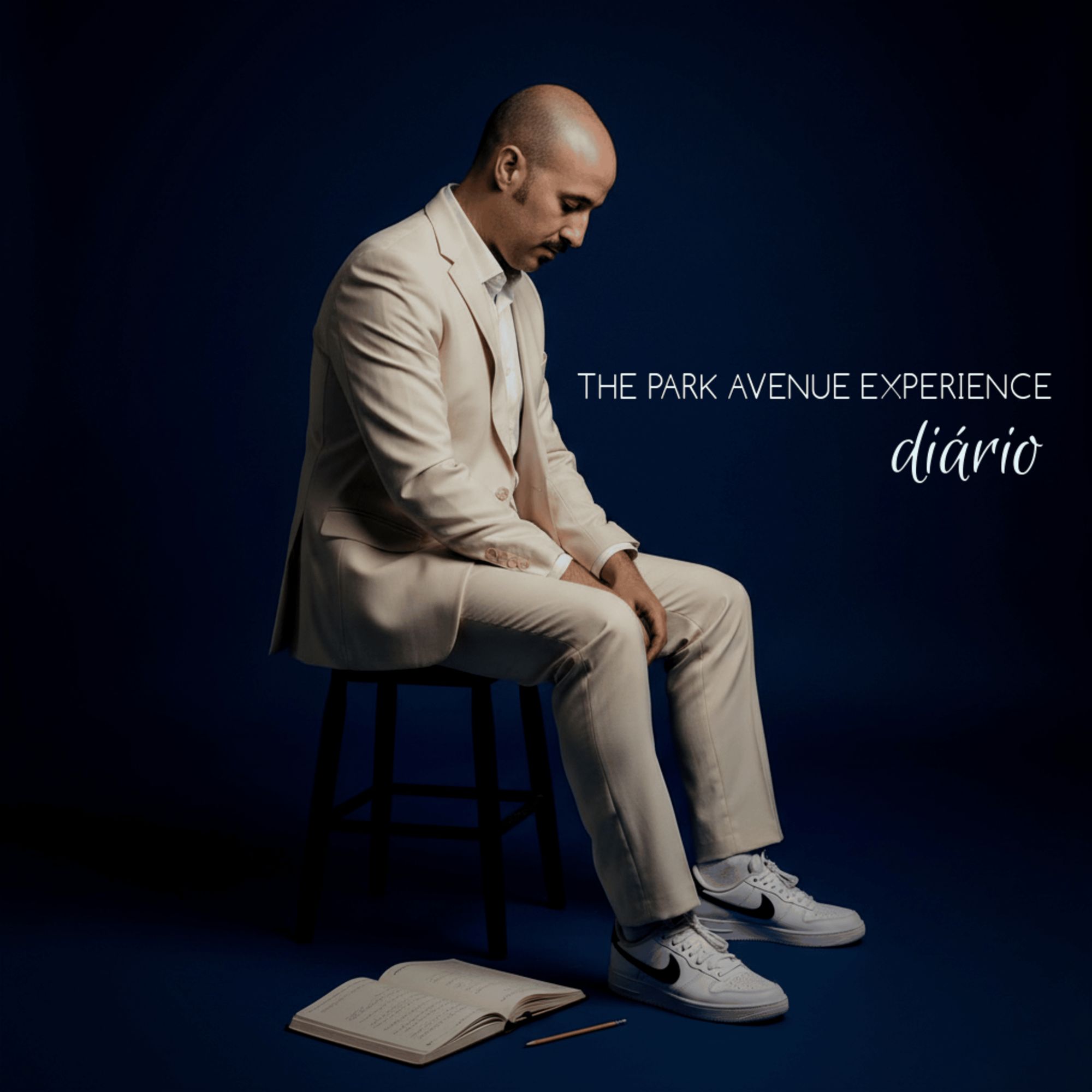
Fabio Puglisi’s latest project, The Park Avenue Experience, delivers Diário, an album steeped in the rich musical traditions of Brazil. Drawing inspiration from legends like Cartola, Dorival Caymmi, Marcos Valle, and Azymuth, Puglisi crafts a lush, rhythmic journey that bridges bossa nova’s elegance with jazz-funk’s groove.
Helmed and produced by Italian musician and composer Fabio, the record marks a defining moment in the project’s evolution, one that leans deeply into Brazilian musical traditions while refining the group’s signature smooth, groove-driven sound.
From the very first notes, Diário establishes its identity as a love letter to Brazil. Not in a superficial or touristic sense, but as a sincere exploration of its musical DNA: samba rhythms, bossa nova subtlety, jazz sophistication, and the warm pulse of jazz-funk all coexist within its ten tracks.
Puglisi himself has described the album as “an homage to Brazilian music in all its forms,” tracing a line from traditional samba to more modern interpretations infused with funk and jazz influences.
The entire album pulses with warm percussion, breezy melodies, and intricate arrangements, echoing Brazil’s golden era while feeling unmistakably fresh. Tracks shimmer with the sophistication of Valle’s harmonies, the rawness of Cartola’s samba, and the cosmic energy of Azymuth’s fusion. Puglisi’s production is meticulous yet organic, each note feels alive, as if recorded in a sun-drenched Rio studio.
This isn’t mere homage; it’s reinvention. The album’s title hints at its personal nature, a musical journal where Puglisi channels Brazil’s soul through his own cosmopolitan lens. Whether through hypnotic batucada beats or velvety Rhodes chords, the record invites listeners into an intoxicating soundscape.
What makes Diário stand out is its commitment to authenticity. Unlike some of the project’s earlier work, which leaned more heavily into electronic textures, this album embraces a predominantly acoustic approach.
Live drums replace programmed beats, organic percussion breathes through each arrangement, and the presence of guitar, less prominent in previous releases, adds a distinctly Brazilian tonal color. The result is a sound that feels alive, tactile, and deeply human.
Stylistically, the album moves fluidly between moods and rhythms while maintaining a cohesive atmosphere. The opener “Esperança” sets the tone with a gentle bossa nova sway, immediately evoking the laid-back elegance associated with Rio de Janeiro’s musical heritage.
Elsewhere, tracks like “Paraíso” dive into deeper funk grooves, showcasing the band’s ability to balance sophistication with groove. By the time the album reaches “Talvez,” the closing track, the rhythm dissolves into a more introspective space, capturing the elusive feeling of saudade, that uniquely Brazilian blend of nostalgia and longing.
Throughout the record, Puglisi demonstrates a keen understanding of restraint. Rather than overwhelming the listener with technical complexity, Diário prioritizes mood, texture, and flow. The arrangements are lush but never crowded, allowing each instrument to breathe.
This approach aligns with the project’s broader philosophy: music not as spectacle, but as atmosphere. It’s an album equally suited for focused listening, quiet evenings, or as a sophisticated backdrop to everyday life.
At its core, Diário is also a conceptual work. Beyond its musical influences, the album is inspired by themes of nature and environmental awareness. Puglisi has emphasized that many of the compositions were driven by a desire to highlight “the importance of safeguarding the beauty of our planet.” This underlying message subtly shapes the listening experience, giving the music a sense of purpose that goes beyond aesthetics.
There is also a strong sense of movement embedded in the album. Puglisi describes Diário as “a love letter to movement… when music takes hold of your body and refuses to let go.” That idea manifests in the rhythmic interplay across the record: even at its most relaxed, there is always a pulse, a gentle forward momentum that keeps the listener engaged. It’s music designed not just to be heard, but felt.
In terms of genre, Diário occupies a fascinating space. It sits at the crossroads of jazz, funk, and MPB (Música Popular Brasileira), but it also carries the accessibility of smooth jazz and the cosmopolitan feel of lounge music.
This hybridity has long been a hallmark of The Park Avenue Experience, yet here it feels more focused and intentional than ever. The Brazilian influence acts as a unifying thread, giving the album a clear identity while still allowing for stylistic variety.
Diário is available exclusively through the Bandcamp page of Inner Worlds Records, reinforcing its status as an independent, artist-driven project. In an era dominated by streaming platforms, this choice feels intentional: it invites listeners to engage more directly with the music, to seek it out rather than stumble upon it.
Ultimately, Diário is not an album that demands attention, it earns it gradually. Its charm lies in its subtlety, its ability to create an environment rather than impose itself.
It reflects an artist who is less interested in chasing trends and more focused on refining a personal vision. For fans of Brazilian music’s greats, or anyone craving transportive rhythms, Diário is essential. It doesn’t just celebrate Brazil’s legacy; it dances with it.
With this release, The Park Avenue Experience demonstrate a deep respect for musical tradition while continuing to carve out their own space within contemporary jazz and groove music.
Diário may be rooted in Brazil, but its appeal is universal: a warm, elegant, and quietly captivating record that invites listeners to slow down, listen closely, and simply feel.