

Not everyone is cut out for expat life. I made all the necessary preparations before moving to Brazil, eager to escape on an airport escalator to the tranquil world of the tropics. My antidote for American chaos would be a postcard-laden paradise. I saw myself strolling along cobblestone streets on a sun-dappled afternoon wearing a Panama hat.
When I arrived, the gorgeous beaches and friendly folks of Brazil welcomed me, and I knew I’d made the right decision.
However, having abandoned my former life, I now need to understand my new surroundings. I’m suffering from what I’ll call King Crimson illness from one of their songs: “Confusion will be my epitaph.”
Let me start with an easy puzzle — the seasons. The 2016 Summer Olympics in Rio de Janeiro were held during Brazil’s winter. Had the Olympics taken place during the summer here, Brazil would have won every medal while the rest of the athletes were hospitalized for heat exhaustion.
Summer in Rio starts a few days before Christmas with temperatures hovering around 100 degrees Fahrenheit with 90 percent humidity.
In Curitiba where I live, there are hailstorms when it’s 80 degrees out. That’s not something you’ll see in the U.S., even these days amid the global climate chaos. Although thousands of miles from the Amazon jungle, Curitiba gets more rain than Seattle.
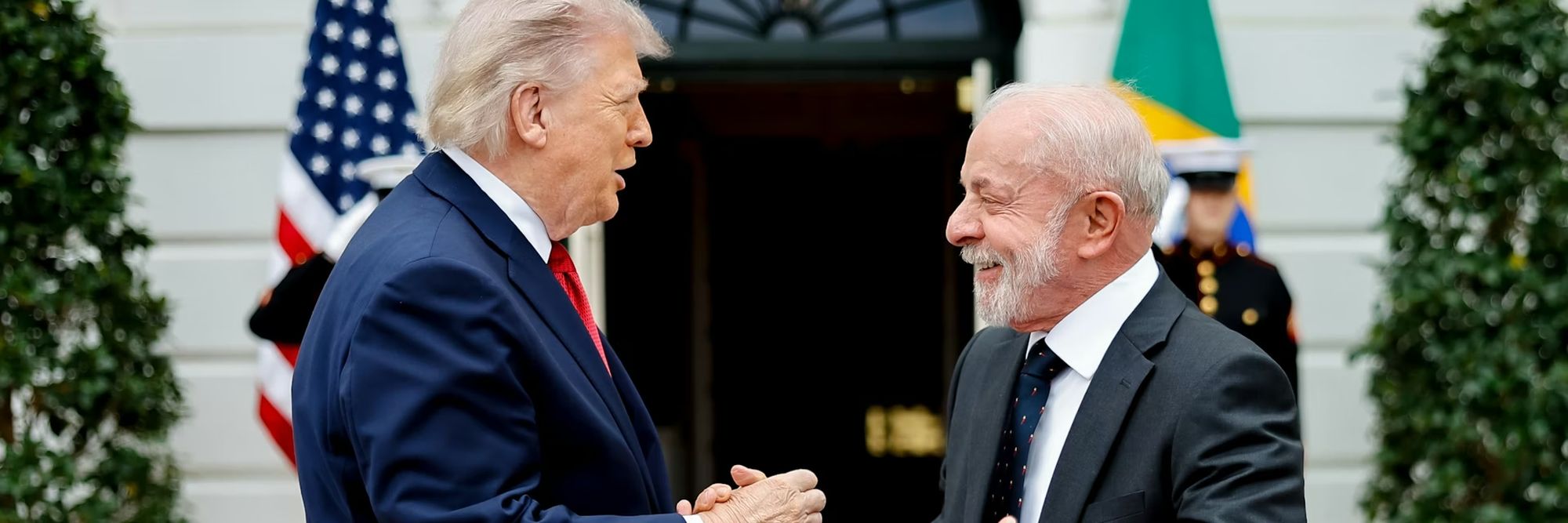
Politics? If you think the U.S. scene is confounding — there are 33 registered political parties in Brazil, and 30 of them have federal representatives in Congress. The current president, Lula, is finishing his third term and will run for re-election this year, after having spent 18 months in jail in Curitiba.
The previous president, Bolsonaro, is under house arrest, outfitted with an ankle monitor. He was sentenced to prison for plotting to assassinate Lula and only avoided prison because of poor health after being stabbed at one his rallies.
I’m not the only one who finds Brazil bewildering. Take a look at the tagline of this magazine: “Trying to understand Brazil since 1989.”
After two decades living here, long enough to get a grip on the basics like buying food at the supermarket, I still don’t understand how boxes of milk aren’t refrigerated until after they’re opened.
Also, I can’t fathom the ATMs. They use a triple tier password system and can scan barcodes to pay everything from the phone bill to the condominium maintenance.
No checks are sent in the mail. With so many functions, the ATM area has bank employees to assist customers.
Brazil has its own digital payment system, PIX, for transferring money via a phone to a friend or store or the supermarket.
I confess it’s not just Brazil that’s bewildering to me. There are mysteries in the U.S., too. For example, how did Hawaii end up with the highest rate of homelessness? Where did they get the plane fare?
Speaking of the homeless, during the Rio Olympics, there were glimpses of the slums in Rio. There are over 1000 favelas in Rio, with nearly a third of the city’s six million residents living in them.
Most favela residents don’t have deeds to their property; they’re squatters, but the longevity of occupancy guarantees them land rights.
Here’s where it gets really confusing: Although poverty is endemic in Brazil, a typical middle-class family owns more than one home. Some own second apartments as rental properties or free domiciles for their married children.
They may have a beach bungalow for weekend jaunts or a small piece of land in the countryside. The porteiro in my building has a small apartment near the beach.
Despite a real estate-savvy middle class, the public education system is lacking. Children go to school only half a day. No Brazilian has ever won a Nobel Prize. Brazilians are so embarrassed of the education system IQ tests don’t exist.
They may not be Nobel Prize winners, but the level of decorum and etiquette is unparalleled. I approached a security guard in a mall and asked him where the bathroom was. He replied, “Olá. Tudo bem?”
I thought that an odd response to my question until I realized he was teaching me etiquette. Where is the bathroom? would work with a security guard in the U.S. but not here. First you say hello, then you ask a question.
I’m sure Brazilians think I’m rude, but it’s inevitable when Where’s the bathroom? Is the only Portuguese phrase I pronounce correctly.
However, when a European approaches a taxi stand, she asks the lead driver, “Are you free?” Here, “Good afternoon. How are you?” to the driver is first.
My favorite exemplars of oratorical politeness are from TV newscasters: “We are going now to the flooding disaster in Petrópolis. Fernanda, tell us what’s happening there.”
“Good morning, Luiz. Good morning to everyone. It seems we have about 10 confirmed dead in last night’s flood.”
A TV journalist must be polite and say hello before getting to the disaster report.
Along with salutations for strangers, eye contact is required, and women kiss to say hello. Saying goodbye is complicated. Two men end a conversation saying abraço (hug) but without hugging.
A work email ends with beijos (kisses) from a woman or abraços from a man. For a street-corner chat, people stay within arm’s length for emphatic touching. Standing on a line, I’m free to caress babies in strollers with mom standing behind me.
Names are equally puzzling because surnames are superfluous. Everyone is on a first name basis as if the country learned naming protocol from Dr. Phil. All doctors are known by their first names — Dr. Michael.
“Doctor” is also used as a sign of respect: “Good morning, doctor” would be the proper way to address a lawyer or judge.
A waiting list to be seated at a restaurant is compiled with first names only. A university graduation program compiles the graduates alphabetized by their first names. Music stores alphabetize their inventory by first name: J for José Feliciano.
Here’s one for the church goers: In a Christian country, no one says, “God bless you” to sneezers. People say nothing at all like they’re politely overlooking an illness.
As if learning to be quiet following a sneeze in a country of diplomatic decorum isn’t enough, remember not to tip anyone — not waiters, taxi drivers, or barbers.
Next, to keep the ball of confusion rolling, try your hand at Portuguese abbreviations. Brazilians transform every abbreviation into an acronym. Considering the enormous number of government departments with unruly titles, we’re talking a serious number of acronyms. The Brazilian School of Economics and Finances at Getúlio Vargas Foundation is FGU EPGE, which becomes the acronym, “foojewepgee.”
The abbreviation for a non-profit organization is ONG. Yet instead of saying N-G-O like in the U.S., an O-N-G is called an “ongee.” The California university UCLA is “ookla.” A VIP is a “veepee.”
Nevertheless, for a software app, people say a-p-p; their one chance to use a simple American acronym, app, is switched to an abbreviation. Go figure.
Confused yet? Brazil has the world’s highest interest rates. A MasterCard or Visa will accumulate about 300 percent interest annually, 20 percent compounded monthly.
High interest rates would make sense if people saved money, but Brazilians are worse at saving than Americans, just four percent save for retirement.
At one point, a president ordered the banks to lower their interest rates on credit cards, and they all did it.
The Supreme Court has a 10-year backlog, about 10,000 cases, but they’ll stop their work for a political emergency, like demoting the president of the senate from his position.
When this happened in 2016, the senate president was deposed not by a majority vote in the Court but by one Supreme Court justice who was in charge of that case.
The senator then announced his intention to ignore the justice’s decision because it was political. Duh. The following day the full Supreme Court voted to allow the senate president to keep his position.
Stupefaction is my guide in the culinary world as well. It’s not customary to find salt/pepper shakers on a kitchen table. If I’m a guest in someone’s home, it would be rude to ask for salt because it implies the cook’s ill preparation.
As compensation, homemakers often over-salt their food. Restaurants don’t have salt shakers on the table; however, if you ask for condiments, they’ll be provided in plastic packets. How many little packets of ketchup it takes to cover a plate of french fries?
For American fugitives from justice with plans to escape to Brazil, be forewarned you’ll need to alter your fingerprints. I enter my fitness club using a fingerprint scanner. Some ATMs and voting machines use them also.
There’s a national ID called an RG, which is in addition to driver’s license photo IDs, social security cards that are hard plastic (CPF), and voter IDs. Producing an RG is required for basic tasks like store exchanges, and people carry their original documents with them.
For me the most extraordinary enigma is the way Brazil finds a way to balance the contemporary and the traditional — ATMs and gyms with fingerprint scanners operate alongside three generations of families living under one roof. Past and present merge seamlessly like a pair of ballroom dancers.
I’m standing in front of a huge stone edifice, the free university in Curitiba, waiting for a local bus to take me a few miles to my apartment. The bus is 100 percent electric. On the corner is an aging shoeshine guy who has no customers. Walking past me, a man is carrying an unwrapped side of beef on his shoulder.
Michael Rubin is an American who has been living in Brazil for twenty years. He’s a regular contributor to Brazzil.com and more of his work can be found at https://www.bmichaelrubin.com.