

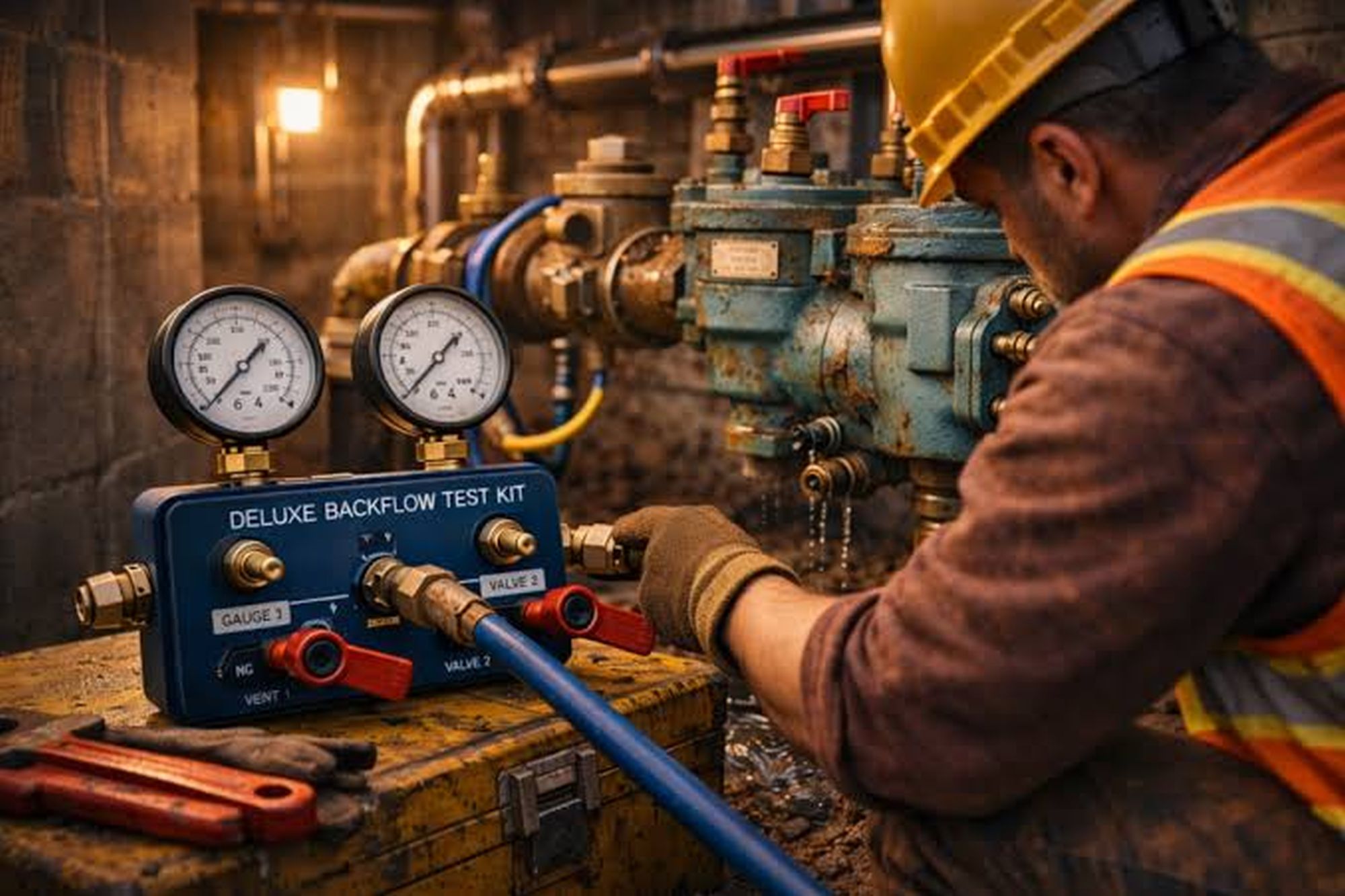
General contractors planning a new commercial build or renovation often face strict requirements for water safety. A property owner may request a new irrigation system or fire sprinkler upgrade, triggering the need for a backflow preventer—a specialized valve that stops contaminated water from reversing into the clean water supply. Before work begins, contractors must navigate Commercial Backflow Installation permits, select the right equipment, and schedule multiple inspections. Failing to plan for these steps can delay occupancy and increase project costs. Preparing early with a clear understanding of the process helps contractors avoid costly mistakes and keep projects on schedule.
Commercial Backflow Installation Permit Requirements for General Contractors
Securing Commercial Backflow Installation permits is a foundational step for any project involving backflow prevention devices. Most municipalities require permits before starting any backflow installation to ensure that plumbing work complies with local water safety codes and protects the public water supply. These permits typically mandate that all work be performed by licensed professionals and that the chosen backflow preventer meets specific standards, such as those set by the American Society of Sanitary Engineering (ASSE) or the Uniform Plumbing Code.
General contractors must check city or county regulations for documentation requirements, which usually include property plans, device specifications, and proof of contractor licensing. Some jurisdictions may also require a hazard assessment to determine which type of backflow preventer is appropriate for a given site. Reviewing local plumbing code compliance early in the planning phase helps avoid permit application rejections and project delays.
Contractors should anticipate permit fees and factor them into project budgets. In many areas, permit applications are processed alongside other plumbing permits, but some localities require a separate submission for backflow devices. Understanding these requirements ensures a smoother approval process and helps contractors maintain project timelines.
Site Planning and Backflow Preventer Selection
Effective site planning involves determining the best location for a backflow preventer based on access, safety, and code requirements. For instance, installing a reduced pressure zone (RPZ) assembly outdoors may require a heated enclosure to prevent freezing in colder climates, while indoor installations need sufficient clearance for maintenance and testing. The device’s placement must also allow for easy inspection by local authorities.
Choosing the right backflow preventer depends on factors such as water usage, contamination risks, and municipal regulations. Double check valve assemblies are often used for low hazard applications like landscape irrigation, while RPZ devices are mandated for higher-risk uses such as chemical processing or medical facilities. Reviewing the property’s water demand and potential hazards guides this selection process.
Site planning must also account for accessibility, drainage, and signage. For projects in multi-tenant commercial buildings, contractors should coordinate with property managers to minimize disruption. Examining backflow preventer installation best practices can help contractors anticipate physical and functional challenges before installation begins.
Permit Applications, Plumbing Drawings, and Required Inspections
Submitting a permit application for a commercial backflow device typically requires a detailed set of plumbing drawings. These technical plans illustrate the proposed device, its connection points, and clearances from other systems. Some jurisdictions demand that drawings are prepared by a licensed engineer or master plumber to validate compliance with local codes.
After submitting the application and plans, contractors should prepare for a review period when the local authority examines the documentation. Approval may be contingent on revisions to the device type or installation location if the plans do not meet code requirements. Contractors should build extra time into their schedules to accommodate this review process.
Once installation begins, local inspectors may require site visits at several stages—before covering any piping, after device placement, and during initial testing. Documenting Commercial Backflow Installation with photographs and accurate logs streamlines this process and provides a clear record for inspectors. These inspection steps help ensure that the backflow device functions as intended and that the installation meets all regulatory standards.
Installation Coordination, Testing, and Final Approval
Coordinating the installation schedule with subcontractors, property managers, and water utility representatives is critical for a smooth process. Backflow preventers must often be installed during off-hours or in phases to minimize disruption to building occupants and operations. Communication with all project stakeholders reduces complications and keeps the work on track.
Once the device is installed, certified testers must perform a series of functional tests to verify that it operates correctly under different pressure conditions. Many jurisdictions require that these tests are witnessed by a plumbing inspector or water authority official. Testing results are typically documented on official forms and submitted as part of the permit closeout process.
Final approval is granted only after the local authority reviews test results and confirms that the installation complies with permit requirements. Maintaining accurate records of device specifications, testing dates, and inspection reports provides a ready reference for future audits or repairs. Proper coordination and documentation ensure long-term system reliability and reduce the risk of costly compliance issues down the line.
Conclusion
Start your commercial backflow project by confirming local permit rules and assembling the required documentation before breaking ground. Early coordination and detailed planning with your team and local authorities will help you avoid costly mistakes and achieve a permit-ready installation that stands up to inspection.