
Brazil consolidated its position as South America’s leading defense spender during 2025, with a military budget of approximately US$ 23.9 billion and a 13% year-on-year increase, while Uruguay recorded one of the steepest relative rises in the region, according to the annual report of the Stockholm International Peace Research Institute (SIPRI).
The region as a whole increased its military spending by 3.4% compared with 2024, in line with a global trend of armed forces modernization, open conflicts, and growing geopolitical tensions.
Globally, military spending reached USD 2.887 trillion in 2025, the eleventh consecutive year of growth. The United States, China, and Russia together concentrated more than half of worldwide investment, a distribution that reflects the weight of the war by the United States and Israel against Iran, the protracted conflict in Ukraine, and the accelerating technological and nuclear race in the Indo-Pacific.
SIPRI attributes the sustained rise to re-equipment programs, defense industrial development, and modernization of capabilities across various regions of the world.
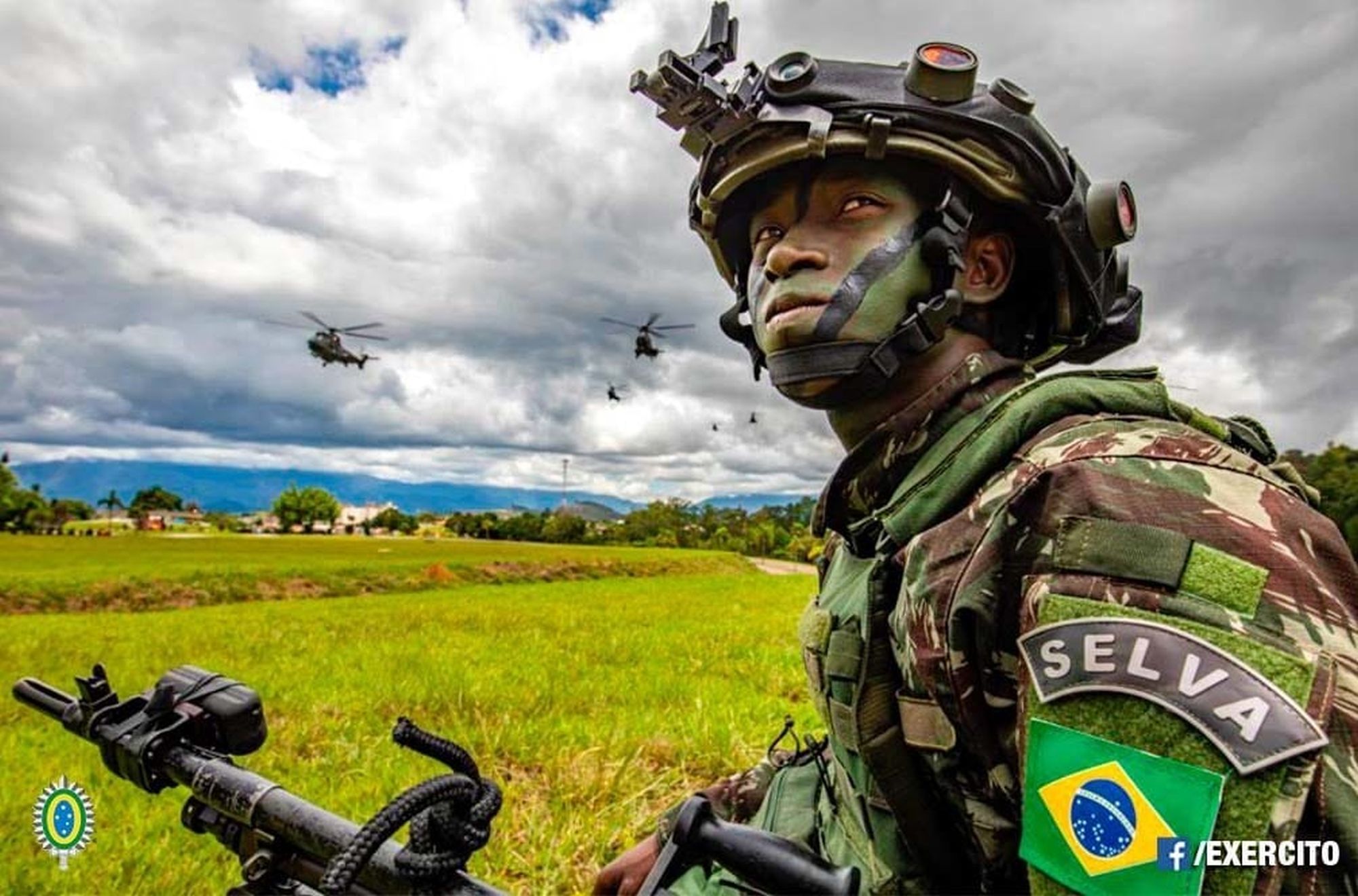
In the South American ranking, Brazil stood well ahead of the rest. Its 13% year-on-year increase responds, among other factors, to the progress of the F-39E Gripen program assembled by Embraer in Gavião Peixoto and to the strengthening of the defense industrial base promoted by the government of Luiz Inácio Lula da Silva.
Behind it appeared Colombia and Chile as the next-largest spenders, both above US$ 270 million per capita in constant values, followed by Guyana, whose expenditure reflects the military escalation derived from its territorial dispute with Venezuela over the Essequibo region.
The most striking data point in the region corresponds to Uruguay, which moved from a military budget of USD 320.9 million in 2020 to USD 577.2 million in 2025, an increase of nearly 80% in five years.
The figure contrasts with the country’s historical trajectory, traditionally one of the least militarized in the region, and positions the Uruguayan state as one of those that have most raised their relative defense effort over the last five-year period.
National authorities have not publicly detailed the specific factors behind the increase, though local analysts link it to equipment renewal programs and tasks tied to monitoring the exclusive economic zone.
Other countries in the region recorded considerably lower levels in comparative terms: Argentina, Bolivia, Paraguay, and Peru remain below US$ 90 million per capita in constant values, while Ecuador stands at around US$ 150 million.
The report does not include updated data for Venezuela, due to the budgetary transparency restrictions in force during the administration of Nicolás Maduro and the initial months of the government of acting President Delcy Rodríguez.
Mercopress